Fail Often, Fail Fast
Failure isn't the opposite of progress — it's the unit of it. The skill is making your failures small, cheap, and informative.
Reading Details
Published
Length
4 min read
Lane
Practice
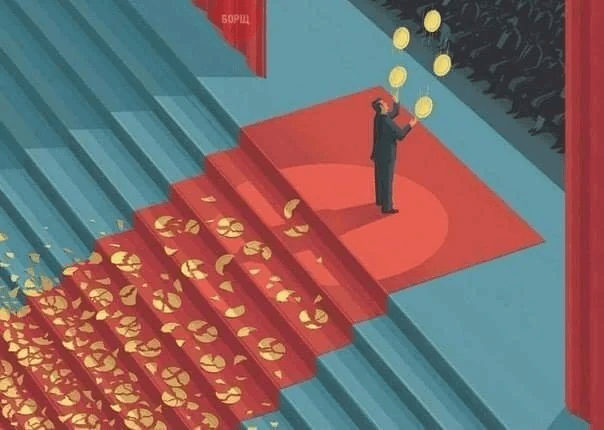
I trained as a biologist before I worked anywhere near technology, and the lab teaches you something about failure that most workplaces never do: it's the default.
Most experiments fail. Not occasionally — mostly. A scientist who ran ten experiments and had ten succeed wouldn't be celebrated; they'd be suspected of not asking hard enough questions. In the lab, a failed experiment isn't a verdict on the experimenter. It's data. The hypothesis was wrong, the conditions were off, the assay was noisy — fine. Write it down, adjust, run it again.
Then we leave school, enter careers, and somewhere along the way failure quietly changes species. It stops being data and becomes identity. A failed project isn't information anymore; it's evidence about you. And once failure feels like a verdict, the rational move is to avoid it — which means avoiding the experiments, which means avoiding the learning.
"Fail often, fail fast" is the correction. But it's widely misread as a celebration of failure, so it's worth being precise about what it actually asks for.
Fail fast is about feedback, not speed
The instruction isn't hurry. It's shorten the distance between acting and finding out.
A failure that takes two years to reveal itself costs you two years. The same failure surfaced in two weeks costs you two weeks and hands you twenty-three more months to use the lesson. The failure is identical; the loop length is the whole difference.
This is why the advice is really about design, not courage. Before starting something, ask: what's the earliest, cheapest signal that this isn't working? Then build the attempt so that signal arrives as soon as possible — a prototype before a product, a conversation before a proposal, a month of doing the work before a career change built around it.
Fail often is about attempts, not carelessness
If most experiments fail — in the lab, in careers, in anything with real uncertainty — then the number of successes is largely a function of the number of attempts. People who seem improbably lucky are usually just running more experiments per year than everyone around them.
But "often" only works when each failure is survivable. This is the part the slogan leaves out, and it's the part that matters most: cap the downside before you start. Small stakes, reversible decisions, time-boxed commitments. The goal is a portfolio of attempts where any single failure is an anecdote, not an ending.
A useful test before any risk: if this fails completely, what exactly do I lose? If the honest answer is "a few months and some pride," proceed freely. If the answer threatens things you can't rebuild — health, key relationships, financial survival — that's not failing fast. That's just gambling with a motivational poster on the wall.
The difference between good and bad failure
Not all failure deserves the celebration. Good failure has two properties:
It's new. Failing in a way nobody — including you — has failed before means the attempt generated information. Failing the same way for the third time means the information was generated long ago and ignored.
It's legible. A failure you can't explain teaches you nothing. This is why the lab habit worth stealing is writing the hypothesis down before the experiment. Decide in advance what you expect and why. Then, when reality disagrees, you can see precisely where your model of the world was wrong — instead of quietly rewriting your memory of what you expected, which is what all of us do by default.
Bad failure is the mirror image: repeated, unexamined, or so large it ends the experimenting. Avoiding those three is the entire discipline.
The quota
Here's the reframe I try to hold: if nothing I attempted this year failed, I didn't learn anything this year — I just executed things I already knew how to do. Comfortable, and stationary.
So the question isn't whether to fail. Operating under real uncertainty, you will. The question is whether your failures are small, fast, cheap, and documented — or large, slow, expensive, and mysterious.
The first kind compounds into judgment. The second kind just compounds.