The Difference Between Being Busy and Becoming Valuable
Busyness measures motion. Value measures compounding. A career can be full of one and empty of the other.
Reading Details
Published
Length
4 min read
Lane
Work
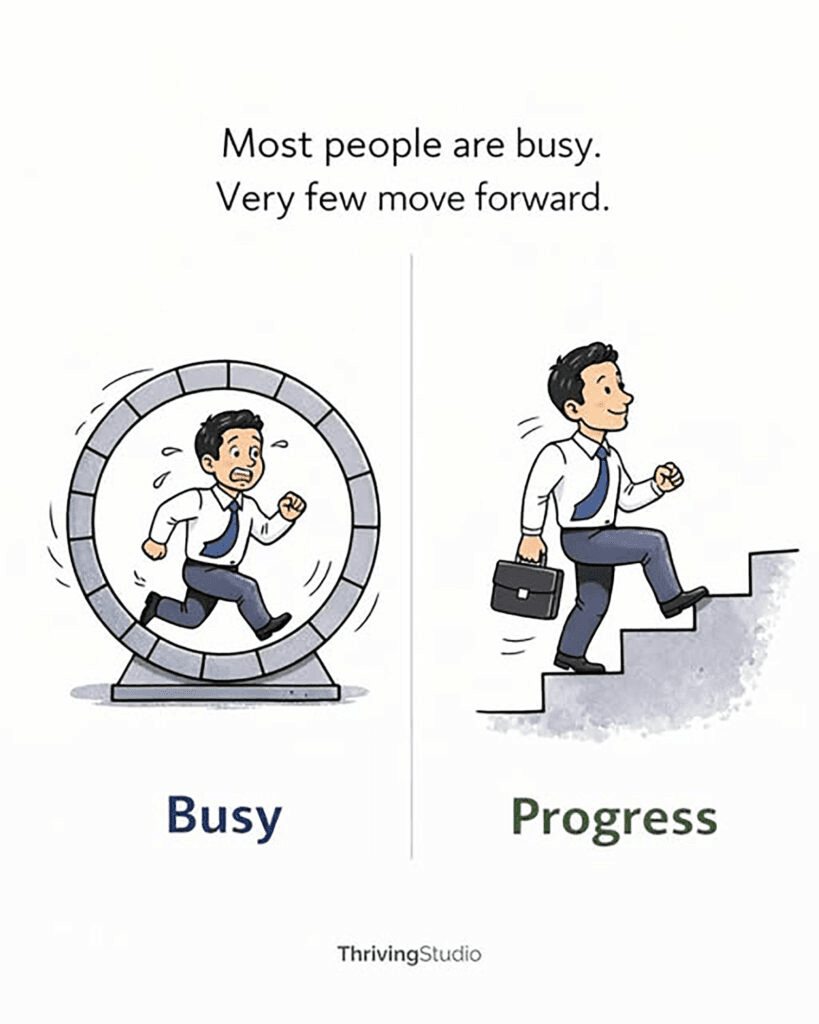
There are two questions you can ask about any working week, and they sound almost identical:
Did I do a lot?
Am I worth more than I was on Monday?
The first question measures busyness. The second measures value. A career can score high on one and near zero on the other for years — and the busyness question is so much easier to answer that most people never notice they're answering the wrong one.
Busyness is a feeling. Value is a position.
Busyness is experienced from the inside: full calendar, fast inbox, the low hum of always being needed. It feels like importance because it borrows importance's symptoms.
Value is assessed from the outside: what can this person do that others can't? What do they know, who trusts them, what problems become solvable when they walk in? Value is a market position, and market positions don't care how tired you are.
The uncomfortable implication: exhaustion is not evidence. You can be depleted every Friday and stationary every year. Plenty of the busiest people in any organization are, in market terms, exactly where they were five years ago — they've just done the same year five times, at increasing speed.
The mechanism of the trap
The busy-but-stationary trap has a specific mechanism, and it's worth seeing clearly.
Organizations reward reliability in the short term. Be the person who responds fast and handles things, and you'll be given more things to handle. Each individual request is reasonable. But responsiveness fills time with work that uses your existing skills rather than building new ones — because that's precisely what makes you fast at it.
Meanwhile, the activities that compound — learning something hard, building relationships outside your immediate team, writing, thinking, doing the project that doesn't exist until you invent it — are all deferrable. Nothing breaks if they don't happen this week. So they don't happen this week, indefinitely.
The trap, precisely stated: urgency fills time with the applications of your value, crowding out its accumulation. You spend the asset instead of growing it, and the spending looks like virtue.
Becoming valuable, concretely
"Provide value" is the kind of advice this essay is supposed to be against, so let me be specific about what accumulation looks like. In most knowledge careers, value compounds along four lines:
Rare skill. Not more skills — rarer ones. The intersection of two or three competent abilities (the engineer who writes clearly; the analyst who can present to executives) is usually rarer, and more valuable, than excellence in one.
Judgment. A track record of good calls under uncertainty. This one can only be built by making calls — which is why pure execution roles, however busy, build it slowly.
Trust. The set of people who would vouch for you, unprompted. Grown in years, spent in seconds, and almost perfectly correlated with how opportunities actually arrive.
Legible artifacts. Work that exists outside your own memory — things written, built, or shipped that someone can inspect. Undocumented value is illiquid value.
The test I try to apply quarterly, because weekly is too noisy: which of these four grew? If the honest answer is "none, but I was extremely busy," that's not a neutral result. That's a quarter spent making someone else's flywheel turn.
Not an argument against work
None of this is an argument for doing less. Compounding requires enormous effort — often more than busyness, because nobody assigns it to you.
It's an argument for auditing where the effort goes. Busy is a description of your calendar. Valuable is a description of your trajectory. The first is visible every day, the second only every year or two — which is exactly why it's the one worth deliberately watching.